
Dubai South Enters Its Real Estate Phase
Dubai South is moving from long-term airport promise to real residential market. What investors should watch before buying.
In brief: Dubai South is moving from a long-term airport story into a more concrete residential market. The district deserves attention because infrastructure, new launches and community formation are starting to align — but investors still need discipline on price, developer quality, handover timing and resale liquidity.
Dubai South is no longer only a line on Dubai’s future map. It is becoming one of the city’s most important tests for long-term real estate investors: a district where infrastructure, residential delivery, airport ambition and timing risk all meet.
For years, the story was simple to summarize: Al Maktoum International Airport would eventually reshape the south of the city. That narrative remains important, but it is no longer enough. The more useful question for investors is now different: is Dubai South beginning to behave like a real residential market, rather than a distant infrastructure bet?
Recent signals suggest that the area is entering a more concrete phase. New residential projects are being announced, market commentators are paying closer attention to Dubai South and Emaar South, and infrastructure-driven demand is becoming easier to read. That does not make every project attractive. It means investors should stop treating the district as an abstract future promise and start reading it with the discipline they would apply to any emerging market inside Dubai.
In our previous article on Al Maktoum Airport and the Dubai South bet, we explained why the airport was a long-term signal rather than an immediate investment guarantee. Today, the story moves one step further: Dubai South is beginning to form its own residential logic.
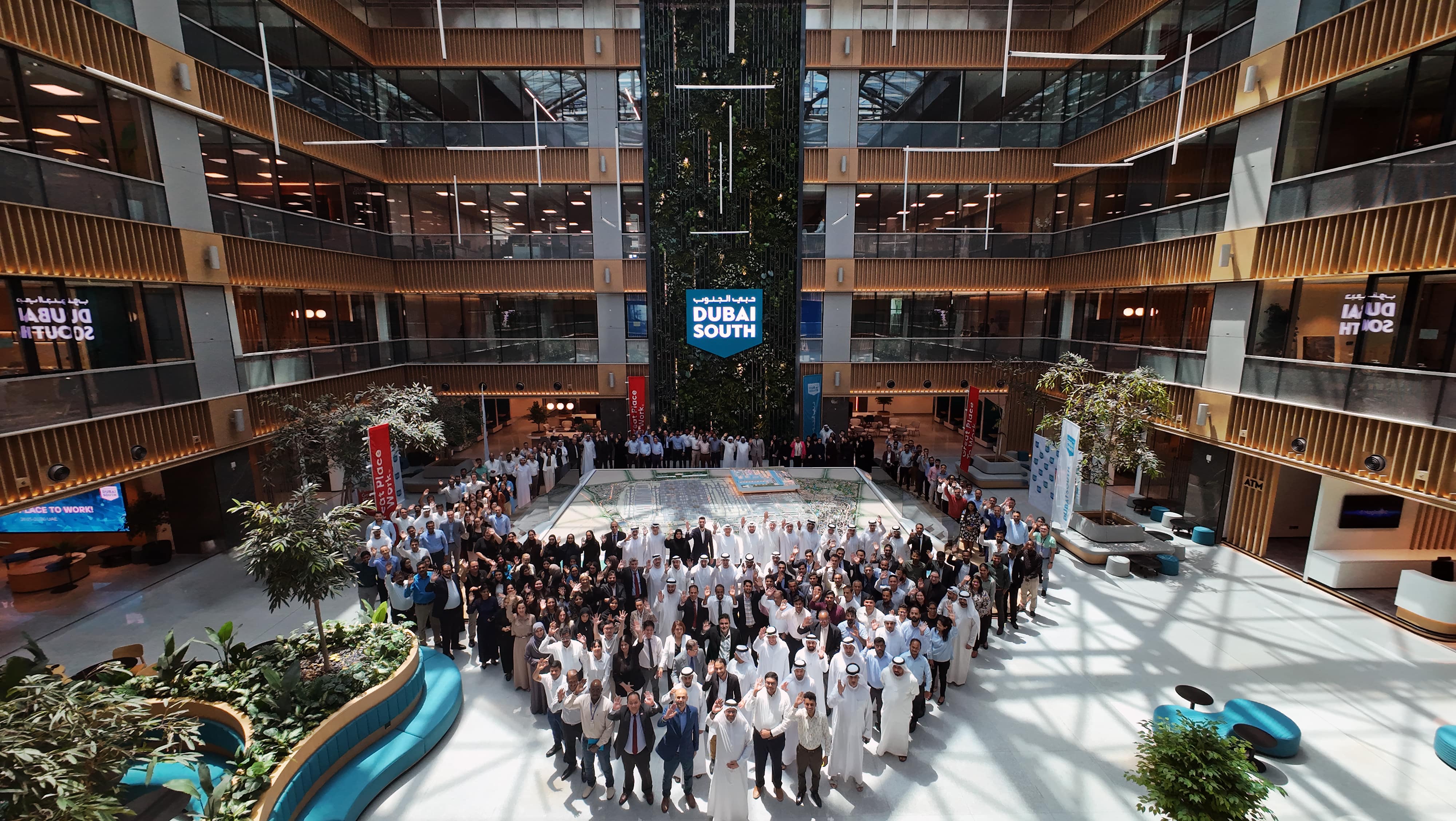
From airport story to residential market
The airport remains the symbolic anchor. Al Maktoum International is designed to become one of the world’s major aviation hubs over the long term, and Dubai’s public direction around the project has already influenced investor attention across the southern corridor of the city.
But real estate markets are not built by announcements alone. They are built by a sequence of practical signals: roads, schools, retail, daily services, population growth, employment nodes, project handovers, resale activity and rental demand. This is where Dubai South becomes interesting.
A district can be famous before it is liquid. It can be strategically important before it is easy to rent, resell or benchmark. The investor’s job is to separate the long-term urban thesis from the short-term buying decision.
Dubai South sits exactly in that tension. The macro thesis is strong: airport expansion, logistics, Expo City proximity, Emaar South, new communities, and land availability. The micro decision remains selective: which project, which developer, which handover date, which price, which exit scenario?
Why developers are accelerating
Developers do not move into a district by accident. They follow land availability, infrastructure visibility, buyer appetite and the possibility of creating a new residential story before prices fully mature.
Dubai South offers that combination. It has the scale to absorb new supply, the infrastructure narrative to attract long-term buyers, and the brand power of major nearby anchors. Recent coverage from regional outlets has pointed to Dubai South’s accelerating market position and new residential launches in the area. One recent ZAWYA item described Dubai South as a fast-growing real estate market linked to infrastructure investment, while another reported a new residential project launch in the district.
For Kyora, the important point is not the marketing claim itself. The important point is what the pattern reveals: developers are treating Dubai South as a district where demand can be shaped now, not only after the airport is fully mature.
That creates opportunity, but also risk. Early-stage districts often offer better entry points than mature prime areas, yet they also require more patience. The premium paid for future infrastructure can appear before the infrastructure has created daily-life value. That is where investors must be careful.
The Emaar South effect
Emaar South plays a specific role in the perception of Dubai South. It gives the district a more recognizable residential frame: villas, apartments, golf-linked lifestyle, and a master-community narrative that investors can understand.
This matters because emerging areas need legibility. Buyers do not only buy coordinates on a map. They buy a story they can explain: airport corridor, family community, future employment base, access to Expo City, long-term growth zone.
Emaar South helps make that story tangible. It also raises the standard for comparison. If a buyer is looking at a smaller or newer project in Dubai South, the question becomes: how does this project compare with the better-known communities around it? Is the price discount enough? Is the developer reliable? Is the payment plan compensating for delivery risk? Is the product likely to hold demand when more supply arrives?
A strong district narrative can lift attention, but individual projects still compete on execution.
What investors should watch before buying
Dubai South should not be approached as a simple “buy before everyone arrives” story. That is too easy. The area deserves a more structured checklist.
1. Entry price versus maturity
The first question is not whether Dubai South has a future. It probably does. The first question is whether the specific price already charges too much for that future.
A buyer should compare the price per square foot, payment schedule and expected handover timing with more established alternatives. The gap must be meaningful enough to justify the district’s earlier-stage profile.
2. Developer track record
In emerging districts, developer quality matters even more. A strong masterplan cannot compensate for weak execution at project level. Investors should review delivery history, construction progress, escrow structure, service-charge assumptions and resale evidence from comparable projects.
3. Actual daily-life infrastructure
Airport headlines create attention. Daily-life infrastructure creates residential demand. Schools, supermarkets, clinics, retail, road access, public transport connections and employment proximity will determine whether the area becomes a lived-in community or remains mainly an investor story.
4. Rental demand profile
Not every Dubai South product will attract the same tenant. Some units may appeal to aviation, logistics or Expo-area workers; others to families looking for larger homes; others to investors seeking lower entry prices. The expected tenant must be identified before purchase, not invented after handover.
5. Exit liquidity
Buying early is easier than selling early. Investors should ask: who will buy this unit from me in three, five or seven years? A future buyer may compare the property with new launches, completed stock, Emaar South, Dubai Investments Park, JVC, Dubai Hills or other value zones. The resale story needs to be credible.
A market to follow, not a shortcut to believe blindly
Dubai South is one of the places where Dubai’s long-term ambition becomes visible. It reflects the city’s ability to build ahead of demand, connect infrastructure with real estate, and turn empty space into a future urban corridor.
That is precisely why investors are watching it.
The best reading is neither blind enthusiasm nor automatic caution. Dubai South deserves attention because the ingredients are becoming more concrete: airport expansion, residential launches, stronger district identity and developer activity. It also deserves discipline because a future city is not the same thing as immediate liquidity.
For long-term investors, the district can make sense when three conditions align: the entry price is rational, the project quality is strong, and the holding horizon is long enough to let the area mature.
For short-term buyers looking for quick resale momentum, the question is harder. Emerging districts can move fast during optimistic phases, but they can also expose investors to delays, supply competition and slower secondary-market absorption.
Kyora view
Dubai South is moving from promise to formation. That makes it more interesting, not less risky.
The investor’s advantage will not come from simply believing in the airport. It will come from reading the district in layers: infrastructure, community maturity, developer execution, price discipline and exit liquidity.
Dubai is accelerating. Dubai South is one of the places where that acceleration can be seen on the map. The opportunity is real enough to study seriously — and early enough to require method.
Sources and useful references
- Kyora previous analysis: Al Maktoum Airport: The Dubai South Bet
- Dubai South official website: dubaisouth.ae
- ZAWYA via Google News: Dubai South emerges as Dubai’s fastest-growing real estate market as infrastructure investments accelerate
- ZAWYA via Google News: Zoya launches Elinor, AED 110mln residential project in Dubai South
Information should be rechecked at the date of purchase, especially project status, handover timelines, service charges, payment plans and official infrastructure milestones.