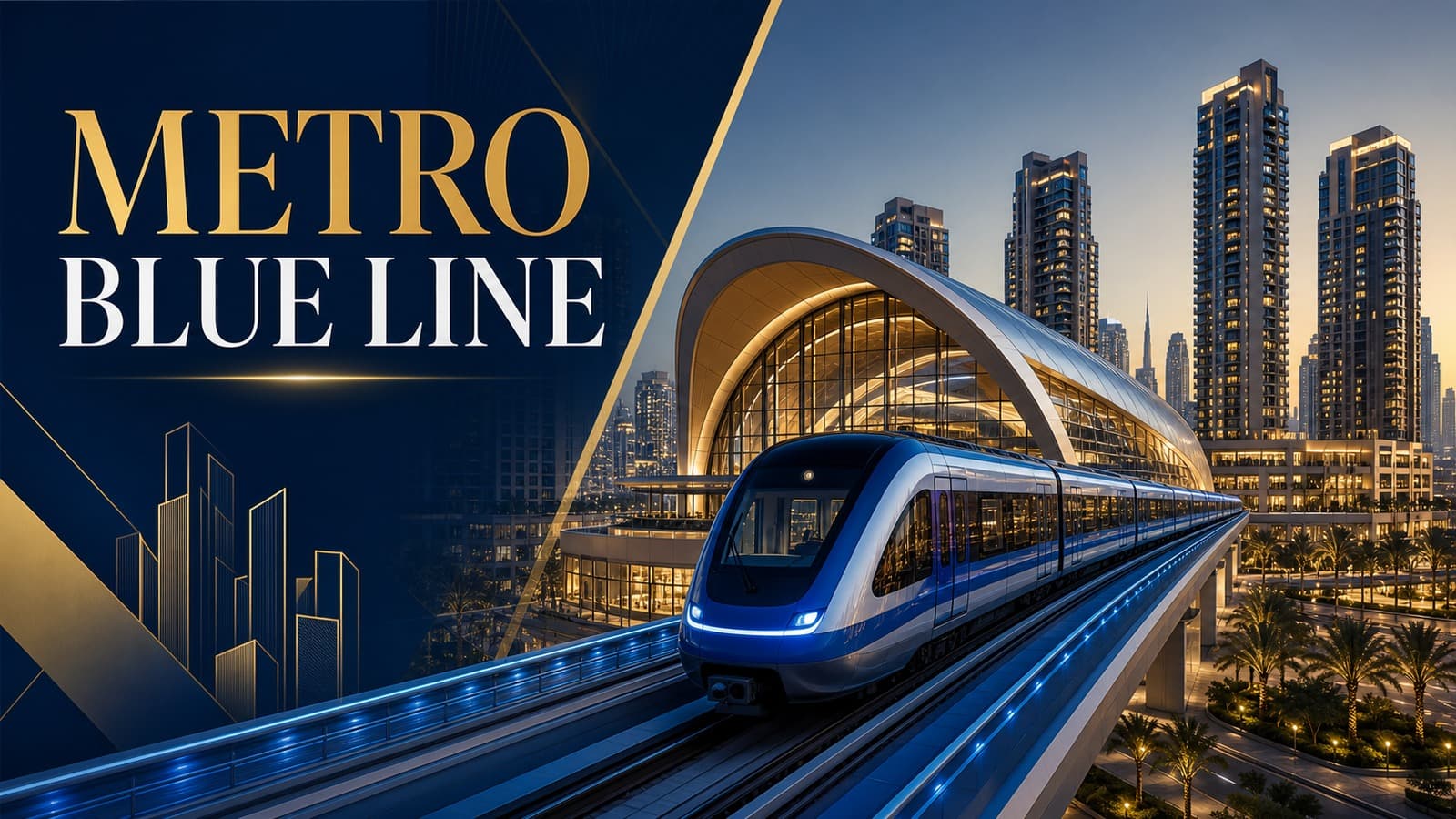
Dubai's Urban Centres Plan: AED 2 Billion to Lift Property Values Around Metro Hubs
Dubai approved a plan for 6 main urban centres and 42 sub-centres, aiming to add AED 20 billion to their property values by 2040. What it covers and what buyers can check now.
On 27 October 2026 the Executive Council of Dubai, chaired by Sheikh Hamdan bin Mohammed, approved the Urban Centres Development Plan. It covers six main urban centres and 42 supporting sub-centres, which together make up about 12% of Dubai's urban area. The budget is more than AED 2 billion, and the government says the plan will add about AED 20 billion to the real estate value of the targeted centres by 2040. For anyone choosing where to buy in Dubai, or advising someone who is, this is one of the clearest official signals of where the city intends to concentrate people, jobs and transport over the next fifteen years.
Primary source: Government of Dubai Media Office, Executive Council meeting, 27 October 2026. Also reported by The National and Reuters on the same day.
First, the words
- Urban centre: a district the city plans to grow as a dense hub where people live, work and shop close together, with services and public transport within easy reach. A sub-centre is a smaller, more local version of the same idea.
- Transit-oriented development: planners' term for putting homes and jobs around metro and other mass-transit stations so that fewer trips need a car. The official release does not use the phrase, but that is exactly what it describes: "concentrating population and jobs around mass transit stations".
- Executive Council: the body that approves Dubai Government plans and policies. The plan itself is overseen by the Supreme Committee for Urban Planning and Dubai Municipality.
What was approved, in numbers
- Scope: 6 main urban centres and 42 sub-centres, about 12% of Dubai's urban area.
- Budget: more than AED 2 billion, with 2040 as the horizon.
- Value target: an increase of AED 20 billion in the real estate value of the targeted centres by 2040. That is roughly ten dirhams of expected value for each dirham budgeted.
- Metro access: raise the share of residents living around metro stations from 52% to 74%.
- Public services: raise public services coverage from 74% to 85%.
- Three pillars: quality of life, economic returns, and infrastructure efficiency and cost, through mixed land use and bringing homes closer to workplaces.
Which areas are in it?
The official release does not name the six main centres or the 42 sub-centres, and we will not guess. As background, the Dubai 2040 Urban Master Plan presented in 2021 identified five main urban centres: Deira and Bur Dubai, Downtown and Business Bay, Dubai Marina and JBR, the Expo 2020 area, and Dubai Silicon Oasis. The new plan counts six, so at least one more has been added, and the list should be checked against official publications from Dubai Municipality once it is released. We covered the wider 2040 framework in Dubai 2040: The Map Property Investors Should Read.
Why it matters for property
The metro is the thread. Moving from 52% to 74% of residents living around metro stations is a large shift, and it only happens if more homes are built, or existing areas are densified, close to stations. That points investors towards stations on existing lines and on the planned Blue Line, which we looked at in Dubai Metro Blue Line: A Real Estate Signal?.
A value target is not a price forecast. AED 20 billion is the government's expected uplift for the targeted centres as a whole by 2040. It does not tell you how much any single building or apartment will gain, or when. Prices will still depend on supply, interest rates and demand in each micro-market.
It sits next to a population policy. At the same meeting the Council approved a Sustainable Population Planning Policy that links population forecasts to economic and urban plans. Dubai has already added about 241,000 residents in 2026, as we reported in Dubai Adds 241,000 Residents in 2026. The urban centres plan is part of how the city intends to house that growth with services close by.
One more item from the same meeting. The Council also approved a Digital Authorisation System, run by Digital Dubai and verified with UAE PASS, that lets individuals and companies authorise someone else to complete low-risk government transactions online. The release says it excludes services that need a notary or legal attestation, so it does not replace a power of attorney for a property sale.
What investors can check now
- Distance to a station. For any shortlisted property, measure the real walking distance to the nearest current or planned metro station.
- Mixed use around it. The plan rewards areas where people can live, work and shop nearby. Look at what is within ten minutes on foot today, not only in the brochure.
- Official maps first. When Dubai Municipality publishes the centres, compare them with marketing claims. A developer saying a project is "in an urban centre" should be able to point to the official document.
- Long horizon. The target date is 2040. This matters most for buyers who plan to hold for years, less for short flips.
For agents: a useful conversation with clients
Clients often ask which areas the government is backing. This decision gives agents a sourced answer: the city is putting money behind dense, well-connected centres around mass transit. The honest version is to share the official release, explain that the list of centres has not been published yet, and help the client compare options on transport access and services rather than on promises of fixed returns. Agents who keep a clear file per client, with the areas they shortlisted and why, can come back with a precise update the day the official map appears.
What we did not claim
We have not named the six main centres or the 42 sub-centres for this plan, because the official release does not list them. We have not predicted price rises for any area. All figures (scope, budget, value target, metro and services percentages) come from the Government of Dubai Media Office release of 27 October 2026. The five centres named in the 2021 Dubai 2040 Urban Master Plan are background only. This is general information, not investment advice.