Dubai Off-Plan Finance: Buyer Checks
Emaar Development and ADCB have put earlier off-plan financing back in the spotlight. For investors, the useful question is not access to debt, but how safely it fits the purchase plan.
Dubai’s off-plan market is entering a more financial phase. A fresh signal came on 29 July 2026, when Emaar Development and ADCB were reported to have formed a strategic collaboration around home-financing solutions for Emaar buyers. Several regional business outlets described the mechanism as allowing eligible buyers to secure up to 50% financing before handover.
For Kyora, the important point is not the headline percentage. It is the change in conversation. When a large developer and a major UAE bank make earlier financing part of the buyer journey, investors should read it as a sign that off-plan purchasing is becoming more structured, more institutional and also more dependent on disciplined personal underwriting.
Debt can help a buyer preserve liquidity. It can also make a weak acquisition look affordable for too long. The right question is therefore simple: does pre-handover finance improve the investment plan, or does it hide risk until completion?
What appears to be new
The reported Emaar-ADCB collaboration matters because it connects three elements that are usually studied separately: the developer sales process, the bank-credit process and the buyer’s handover timeline. In a traditional off-plan purchase, many investors focus first on the reservation, the payment plan and the expected completion date. Financing is often examined later, sometimes only when the buyer approaches a major instalment or handover.
Earlier bank visibility can change that sequence. If a buyer can discuss eligibility before handover, the investment plan becomes less dependent on hope. The investor can test income, liabilities, down-payment capacity, documentation, interest-rate sensitivity and liquidity reserves earlier in the process.
That is positive when it creates clarity. It is dangerous when it creates premature confidence. A financing indication is not the same thing as a completed mortgage, and each buyer still needs to verify final approval conditions, valuation, fees, tenor, rate structure, insurance, income assumptions and any project-specific requirements.

Why this matters for off-plan buyers
Off-plan investing is not only a property decision. It is a sequencing decision. The buyer commits today, pays over time, waits for construction, prepares for handover, then either occupies, rents, refinances, resells or holds. Every step has a cash-flow consequence.
When bank financing enters earlier, the investor should rebuild the full timeline. What has already been paid? What remains due before completion? What happens if the handover date moves? What if rates are different at final approval? What if the bank valuation comes below the buyer’s expected price? What if the investor’s personal income profile changes before completion?
These questions are not pessimistic. They are the difference between a premium investment process and a promotional purchase. Dubai rewards buyers who can separate access from affordability. A buyer may qualify for debt and still be taking too much concentration risk in one unit, one district, one developer or one currency exposure.
The useful investor reading
The Emaar-ADCB signal should be read in four layers.
First, institutionalisation. The more banks, developers and buyers coordinate around documentation and financing before handover, the more mature the off-plan market becomes. This supports trust when the process is transparent and well explained.
Second, liquidity discipline. Earlier financing can help buyers preserve cash for furnishing, service charges, vacancy, maintenance, transfer costs and life outside the property. That matters because many weak investments fail not at the headline price, but in the overlooked cash requirements around it.
Third, selection pressure. If financing becomes easier to discuss, investors must become stricter about what they finance. Debt should not be used to chase every launch. It should be reserved for assets where location, developer credibility, pricing, tenant demand and exit logic remain convincing under conservative assumptions.
Fourth, handover realism. Bank involvement does not remove construction, snagging, documentation or completion risk. A financed off-plan unit still needs escrow checks, developer track record review, payment-plan clarity and a realistic handover plan.
How it complements Kyora’s existing guides
In our Dubai mortgage guide, we explained that financing should be tested through total cost, safety margin and liquidity, not only through the advertised rate. This new signal adds a more specific off-plan question: when financing becomes available earlier in the journey, how does the buyer keep control of timing and risk?
It also connects directly with our article on Dubai escrow for off-plan buyers. Escrow structures the flow of project money, but it does not replace buyer-level due diligence. Financing and escrow answer different questions. Escrow asks where project payments go. Financing asks whether the buyer can carry the acquisition safely through completion and beyond.
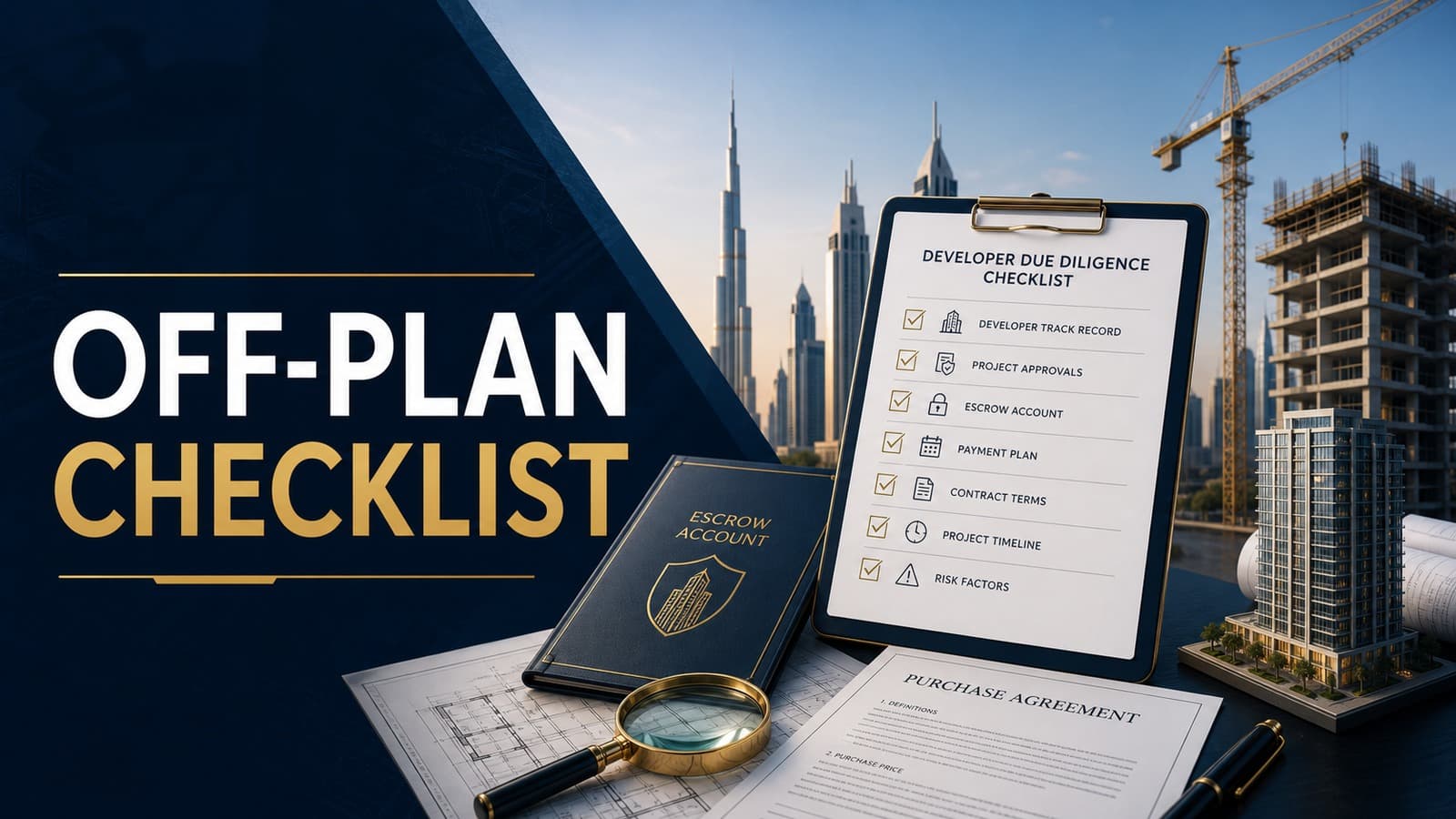
Finally, the topic reinforces our developer checklist. A bank partnership may improve process comfort, but the investor must still review the building, district, service charges, construction stage, comparable pricing, rental demand and likely resale liquidity.
Questions to ask before accepting early finance
Before treating pre-handover finance as a green light, a buyer should ask the bank and adviser several practical questions.
- Is the financing approval final, conditional or only indicative?
- Which documents will be required now, before handover and at final drawdown?
- How is the property valued for lending purposes, and when can that valuation change?
- What happens if completion is delayed or if the handover date shifts?
- Does the buyer have enough cash for remaining instalments, fees, furnishing, service charges and vacancy?
- Is the rate fixed, variable or subject to repricing before completion?
- Can the unit still be rented or resold under conservative assumptions if financing costs rise?
These questions are especially important for non-resident buyers. Cross-border income, documentation, currency exposure, tax residence and banking timelines can make the financing process slower than expected. A buyer outside the UAE should not assume that a headline partnership automatically solves personal eligibility.
What agents should take from it
For agents, earlier financing is an opportunity to raise the quality of advisory conversations. The best response is not to use the headline as a closing tool. It is to help clients model the purchase properly.
A serious agent should be able to say: here is the payment schedule, here is the financing assumption, here is the cash reserve needed, here are the documents to prepare, here is the handover risk, here is the service-charge question, here are comparable rents and resale options, and here is what must be verified directly with the bank before commitment.
That kind of conversation builds trust. It also protects the market from weak buyers entering positions they cannot complete comfortably.
Bottom line
Dubai accelerates when ambition becomes infrastructure, regulation and process. Earlier off-plan financing can be part of that maturation. It can make the buyer journey clearer, help investors plan liquidity and bring bank discipline into the decision earlier.
But financing is not a substitute for judgment. The best investors will not ask only whether they can borrow before handover. They will ask whether the unit deserves leverage, whether the timeline is robust, whether cash reserves are sufficient and whether the exit still works if the market becomes more selective.
Access to debt is useful. Discipline decides whether it becomes an advantage.
Sources and useful references
- Emaar Properties / Google News indexed release, “Emaar Development and ADCB Form Strategic Collaboration...”, 29 July 2026: Google News source entry.
- Regional coverage on the same signal was listed by Google News from Gulf News, Emirates 24|7 and Construction Week Online on 29 July 2026. The exact financing terms must be reconfirmed directly with the bank/developer before any buyer decision.
- Kyora, “Dubai Mortgage Guide: Fixed Rates and Real Budget”: context.
- Kyora, “Escrow in Dubai: The Off-Plan Safety Check”: context.
- Kyora, “Off-Plan in Dubai: Developer Checklist”: context.